
Loading
Loading
Loading
Answers to common questions about insulation, spray foam, ventilation, roofing, and coatings for properties in Lacey's Spring, AL.
Check whether certain rooms remain uncomfortable while others maintain the desired temperature. Missing insulation, air leaks, duct problems, or poorly balanced airflow can all contribute. An insulation assessment and HVAC inspection can help identify the cause before you make improvements.
Considering insulation improvements before replacing your HVAC system can help determine your property's heating and cooling requirements. Reducing unwanted heat transfer may change the required equipment capacity. Have the building's heating and cooling loads evaluated before selecting replacement equipment.
Spray foam may be installed around suitable wiring when applicable electrical and building requirements are met. A qualified electrician should evaluate older or damaged wiring before installation. Electrical junction boxes must remain accessible, and required clearances around heat-producing components must be maintained.
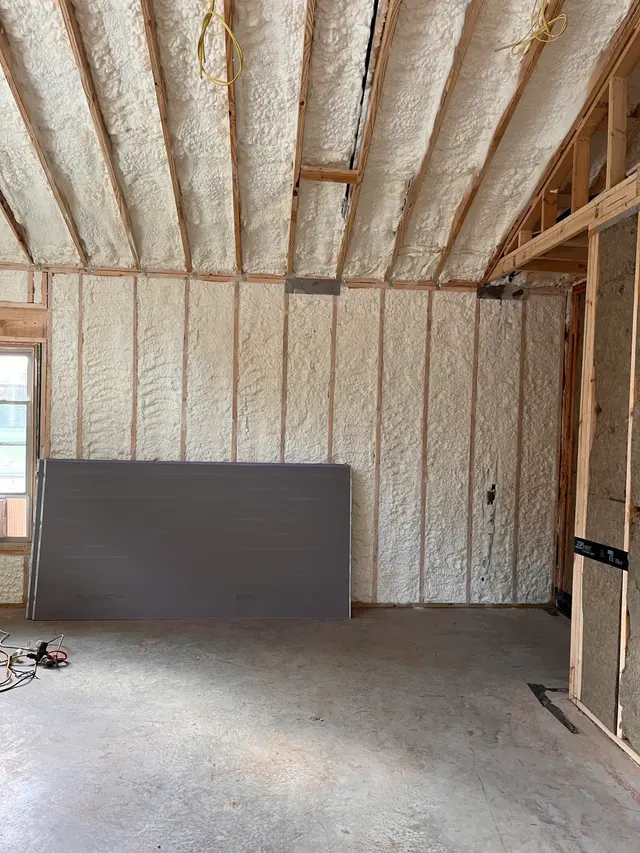
Ask your installer about the specified foam thickness and R-value before work begins. You can check thickness at accessible locations using appropriate measurement methods. The completed installation should match the agreed specifications and the selected product's application requirements.
Insulation that also seals air leaks can reduce uncontrolled outdoor air entering the building. This may change how fresh air enters and stale air leaves the property. Evaluate ventilation to maintain appropriate indoor air quality after significant air-sealing improvements.
Yes, you can sometimes add blown-in cellulose over existing insulation if it remains dry and in suitable condition. Inspect the existing material for damage, gaps, and moisture problems. You must also maintain required ventilation clearances and electrical safety requirements.
Mineral wool may be a better choice when fire resistance, sound control, and insulation in framed cavities are priorities. It is noncombustible and generally allows water vapor to pass through. The appropriate material depends on the building assembly and performance requirements.
Yes, you can install insulation in a metal building while preserving necessary ventilation openings and airflow paths. These areas should be identified before application begins. Blocking required ventilation can contribute to moisture buildup and interfere with the building's intended operation.
Consider whether the workshop will be heated, cooled, or used for activities that produce heat, fumes, or moisture. Electrical equipment and ventilation requirements also affect where you can place insulation. A suitable insulation plan should account for working conditions and future maintenance access.
No, every encapsulated crawl space does not automatically require a separate dehumidifier. Humidity control depends on the crawl space design, drainage conditions, air sealing, and conditioning strategy. Evaluate moisture levels to determine whether mechanical dehumidification is necessary.
Look for standing water, damp framing, roof leaks, and moisture entering through building connections. Lacey's Spring can experience heavy rainfall and humid conditions that expose existing moisture problems. Identifying and fixing water intrusion before installing insulation helps prevent hidden damage.
No, spray foam roofing and roof coatings serve different purposes. Spray foam roofing uses an insulating foam layer covered by a compatible protective coating. Roof coatings protect suitable existing roofing surfaces but do not provide the same thermal insulation as a spray foam roofing system.
Yes, an existing spray foam roof may qualify for recoating if the underlying foam and roof assembly remain sound. Damaged sections must be inspected and repaired before application. The new coating must be compatible with the existing system and meet preparation requirements.
Polyurea coatings may be appropriate when the primary concern is protecting suitable surfaces from abrasion or demanding service conditions. They are not a replacement for thermal insulation. Surface preparation, coating thickness, and product selection depend on the intended application.
Yes, you can install insulation near equipment when you preserve required access, ventilation, and safety clearances. Service panels and components requiring maintenance must remain accessible. Planning these details before installation can help prevent unnecessary insulation removal during future repairs.