
Air leakage control
Helps reduce unwanted airflow through properly insulated building surfaces.
Loading
Loading
Closed-cell spray foam insulation provides high thermal resistance per inch, limits air leakage, and resists moisture vapor movement. Tennessee Valley Spray Foam provides professional closed-cell spray foam services in Lacey's Spring, AL, and surrounding areas for residential, commercial, and agricultural properties. Our team focuses on proper preparation, accurate insulation thickness, and careful application to meet each building's needs.
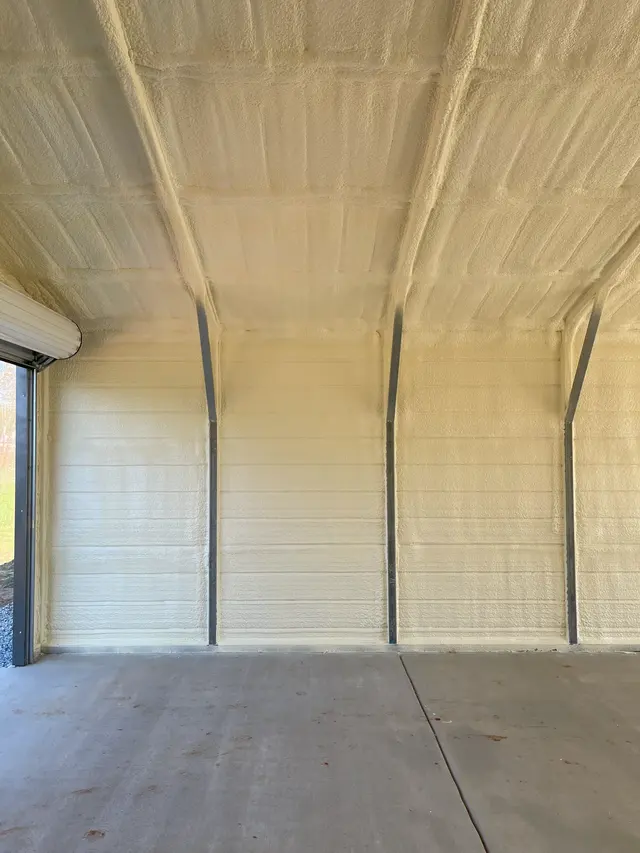
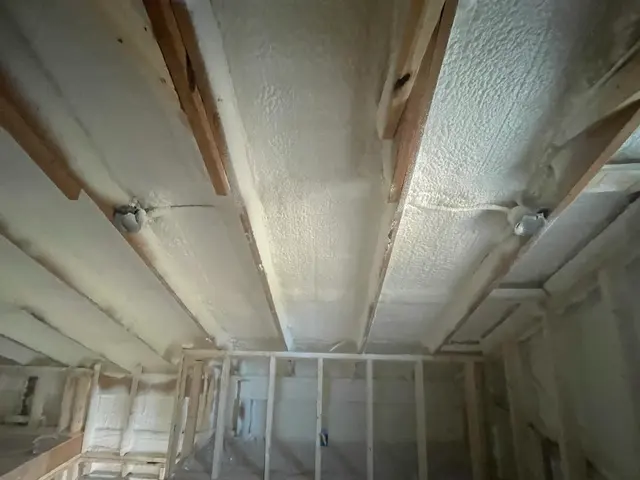
Closed-cell polyurethane spray foam is a rigid, high-density, water-resistant insulation material that bonds to properly prepared surfaces. Its structure provides thermal resistance and helps limit air leakage and moisture vapor movement when installed at the required thickness.
The benefits of closed-cell spray foam insulation depend on the building's construction, existing conditions, and installation quality. Proper application can support indoor comfort and energy efficiency, but the material does not replace drainage systems or repair active water leaks.
Helps reduce unwanted airflow through properly insulated building surfaces.
Helps limit heat transfer when installed at the appropriate thickness.
Provides higher R-value per inch where insulation depth is limited.
Helps reduce moisture vapor movement in properly designed building assemblies.
Fills irregular spaces and accessible gaps where fitted materials may leave openings.
Get expert closed-cell spray foam from Tennessee Valley Spray Foam, planned around your building and comfort needs.

Tennessee Valley Spray Foam provides closed-cell spray foam insulation for residential, commercial, and agricultural buildings. We recommend suitable application areas based on construction details, moisture conditions, and insulation requirements.
Common applications of closed-cell spray foam insulation include:
| Application | How Closed-Cell Spray Foam Helps |
|---|---|
| Basements | Insulates suitable foundation walls and framing areas while accounting for moisture conditions. |
| Crawl Spaces | Helps reduce heat transfer and air leakage after drainage and moisture problems are addressed. |
| Exterior Walls | Improves thermal resistance and air sealing in accessible wall cavities. |
| Metal Buildings | Helps reduce heat transfer and condensation risks on compatible metal surfaces. |
| Roofs | Insulates suitable roof assemblies while accounting for ventilation, moisture control, and fire protection. |
| Commercial Buildings | Improves insulation coverage in offices, warehouses, and other commercial facilities. |
| Pole Barns | Insulates suitable walls and roof assemblies based on the building's construction and use. |
| Agricultural Buildings | Provides insulation for suitable farm structures and work areas. |
| Storage Buildings | Helps reduce temperature fluctuations and moisture-related concerns in storage areas. |
| Poultry Houses | Insulates suitable surfaces while considering ventilation, humidity, and animal safety. |
| Food Storage Facilities | Supports temperature control while accounting for sanitation, moisture, and protective covering requirements. |
Each application requires proper preparation, material thickness, and building-specific planning. We check these conditions before recommending where to install closed-cell spray foam.
The closed-cell spray foam insulation R-value measures how well the material resists heat flow. Typical closed-cell products provide approximately R-6 to R-7 per inch, although the actual R-value depends on the product and installed thickness.
Closed-cell foam provides relatively high thermal resistance in limited spaces, making it suitable where insulation depth is restricted. However, the required thickness depends on the building assembly, applicable energy requirements, and project specifications.
We determine the right installation depth for your property's needs. Our team also considers surface conditions, application requirements, and any necessary protective coverings before work begins.
Closed-cell spray foam insulation costs depend on the area being treated, required foam thickness, surface conditions, and accessibility. Additional preparation, removing existing insulation, or protective coverings can also affect the final price.
We provide quotes based on your property's requirements and explain the work included. When comparing estimates, consider insulation coverage, installed thickness, preparation, and cleanup, not just price.
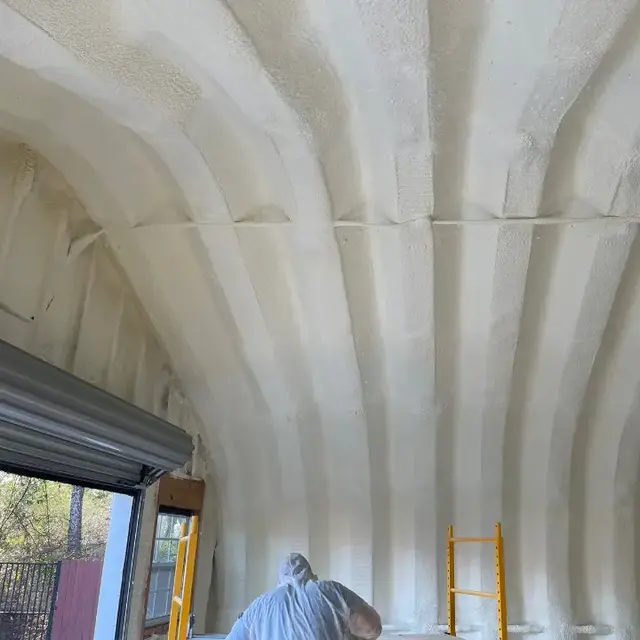
Our closed-cell spray foam installation process focuses on careful preparation, proper application conditions, and consistent insulation coverage.
We inspect accessible areas, existing insulation, moisture conditions, and construction details to determine the appropriate installation approach.
We protect nearby surfaces and check that application areas are clean, dry, and suitable for spraying.
We apply closed-cell spray foam at the specified thickness, following manufacturer instructions for temperature, application passes, and curing.
We check the installed foam for consistent coverage and identify areas requiring correction.
We clean the work area, review applicable fire-protection requirements, and provide ventilation and safe re-entry instructions.
Closed-cell spray foam is combustible and may require an approved thermal barrier or other fire-protective treatment, depending on the building assembly and applicable codes. Occupants, animals, and unprotected workers should remain outside the designated work area during installation and until the team meets re-entry requirements. Residential occupants and pets should leave the home during indoor spraying.
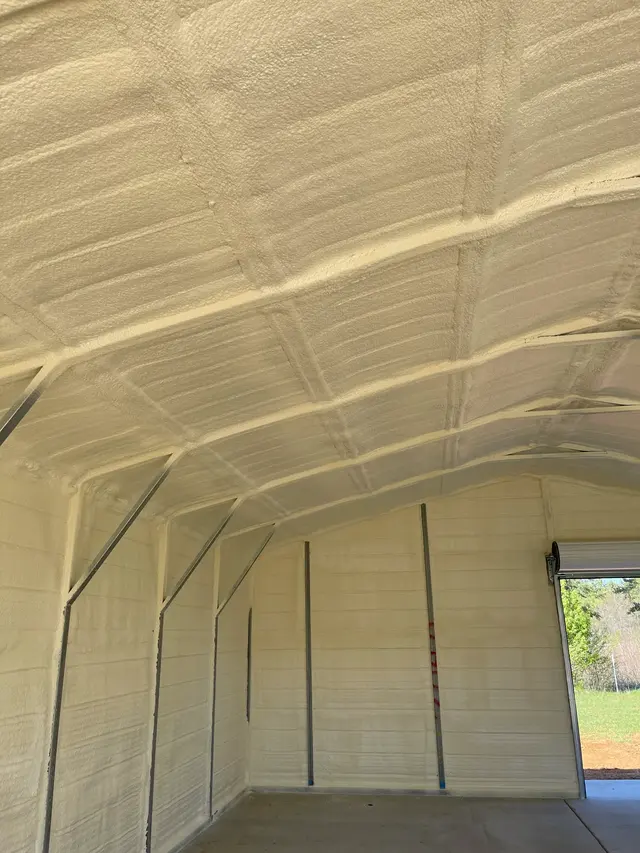
Tennessee Valley Spray Foam provides closed-cell spray foam insulation solutions based on each property's construction, insulation needs, and moisture conditions. Our team checks surface conditions, available insulation depth, and application requirements before recommending the appropriate installation approach.
We focus on careful preparation, correct foam thickness, and consistent coverage to support reliable insulation performance. Our attention to material compatibility, safety requirements, and installation quality helps property owners understand what to expect throughout the project.
No. The right insulation depends on the building's construction, moisture conditions, available space, and applicable requirements. Closed-cell spray foam suits many applications, but each building needs a proper assessment before installation.
Not always. Removal depends on the existing insulation's condition and whether it prevents access to the intended surfaces. You may need to remove wet, damaged, or unsuitable insulation before spraying.
Yes. You can cut away cured foam when you need access for electrical repairs or renovations. However, removing foam may damage the surrounding insulation, requiring localized repairs to restore coverage.
No. Insulation requirements vary by building type, construction details, intended use, and applicable energy codes. Residential, commercial, and agricultural buildings may require different insulation approaches.
Some coatings are compatible with cured closed-cell spray foam, but ordinary paint does not automatically meet fire-protection requirements. The appropriate coating depends on the foam product, installation location, and applicable building codes.
Request a quote for closed-cell spray foam insulation in Lacey's Spring, AL, and surrounding areas. Contact Tennessee Valley Spray Foam to schedule an appointment.