
Thermal resistance
Helps reduce heat transfer through suitable roof assemblies.
Loading
Loading
Poor roof insulation, damaged protective coatings, and unwanted heat transfer can affect the performance of commercial and industrial buildings. Tennessee Valley Spray Foam provides professional spray foam roofing services in Lacey's Spring, AL, and surrounding areas. We use suitable closed-cell spray foam and protective roof coatings to support thermal performance, weather resistance, and long-term roof protection. Our team focuses on proper surface preparation, material compatibility, and careful installation based on each roof's condition and requirements.
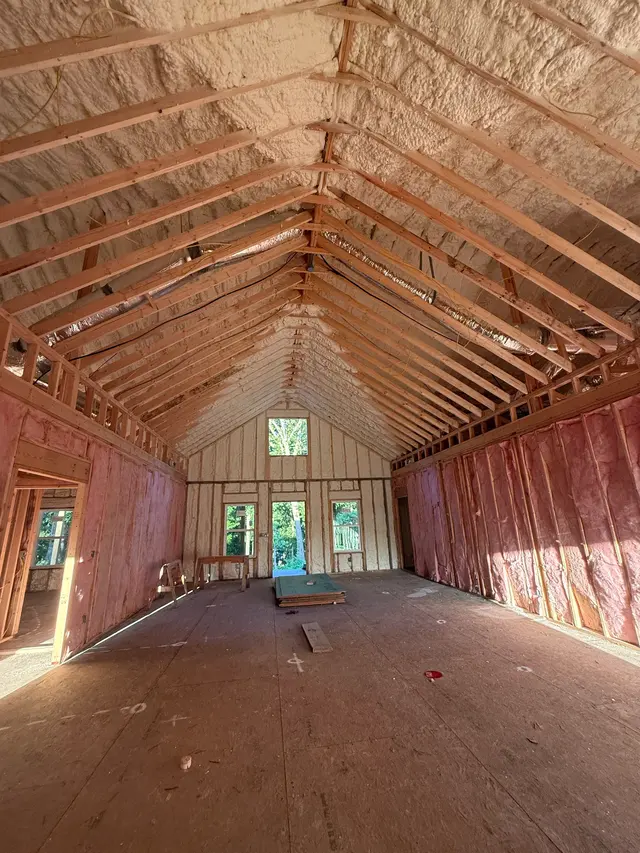
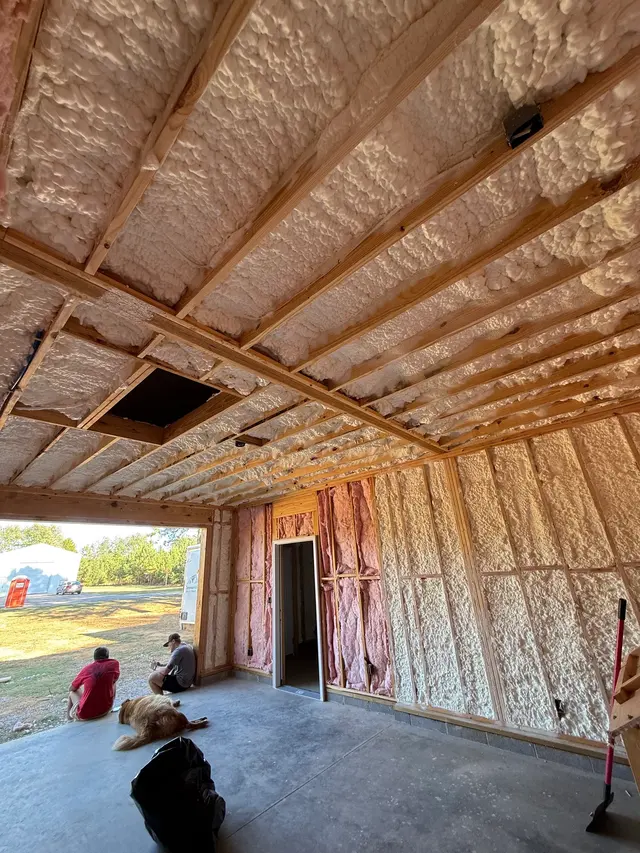
Spray foam roofing combines insulation with a protective coating to help manage heat transfer and weather exposure. When installed over a suitable roof surface, the foam forms a continuous insulating layer, while the coating protects it from sunlight and environmental conditions.
The benefits depend on roof preparation, drainage, material compatibility, and installation quality. A properly designed system can support roof performance, but existing leaks, damaged decking, and drainage problems must be addressed before installation.
Helps reduce heat transfer through suitable roof assemblies.
Creates a continuous foam layer over compatible roof surfaces and properly prepared details.
Uses a compatible elastomeric coating to protect the foam from sunlight and weather exposure.
Conforms to suitable roof contours and details without requiring pre-cut insulation boards.
Damaged sections may be repaired when the surrounding roofing system remains in good condition.
Get expert spray foam roofing from Tennessee Valley Spray Foam, planned around your building and comfort needs.
Tennessee Valley Spray Foam uses roofing-grade closed-cell spray foam and compatible elastomeric roof coatings. Both materials serve different purposes and must work together to support the roofing system's performance.
| Material | Key Characteristics | Purpose |
|---|---|---|
| Closed-Cell Spray Foam | Rigid, high-density foam that provides thermal resistance and helps limit air leakage. | Creates an insulating layer over suitable, prepared roof surfaces. |
| Elastomeric Roof Coatings | Flexible protective coatings designed for compatible roofing systems. | Protect the foam from UV exposure and help provide weather and water resistance. |
Roofing-grade closed-cell polyurethane foam is applied to a compatible, prepared surface and cures into a rigid insulating layer. A protective elastomeric coating is then applied according to the roofing system's requirements.
Spray foam roofing typically provides an R-value of approximately R-5.5 to R-6.5 per inch, depending on the product. R-value measures resistance to heat flow, while installed thickness and the overall roofing assembly affect thermal performance.
A complete spray foam roofing system also requires proper drainage, suitable coating thickness, and attention to roof penetrations and other details. We consider these factors before recommending an installation approach.
Spray foam roofing can be applied to different commercial and industrial roof assemblies when the existing surface is sound and compatible with the selected system. Roof condition, slope, drainage, and accessibility help determine whether the installation is appropriate.
Provide insulation and protective coverage on suitable roof surfaces while maintaining proper drainage.
Create a continuous insulating layer that helps reduce heat transfer and supports weather protection.
Improve insulation and roof protection for suitable offices, retail buildings, and other commercial properties.
Address insulation and protective coating needs while accounting for rooftop equipment, maintenance access, and operating conditions.
Not every roof is suitable for direct spray foam application. Existing damage, trapped moisture, incompatible roofing materials, or drainage problems may require additional work before installation begins.
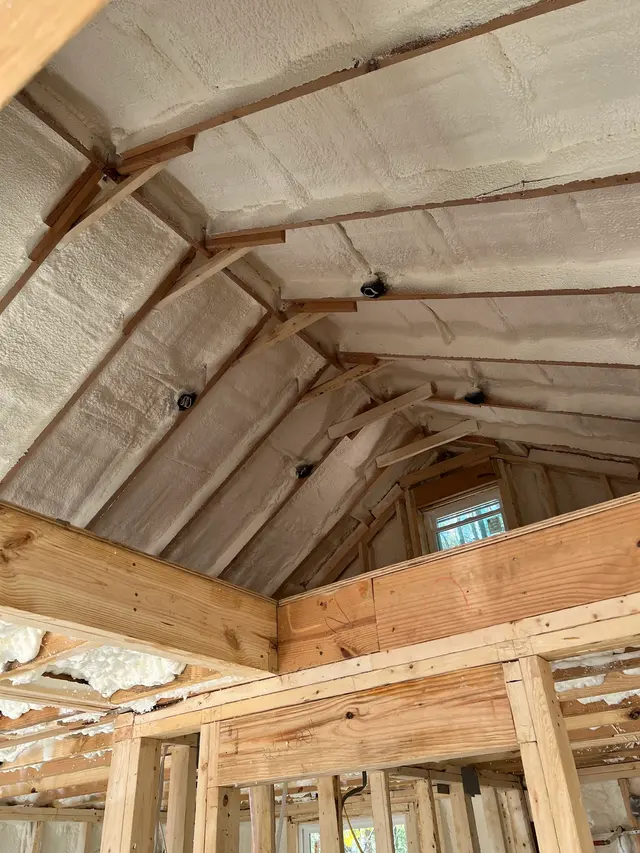
Our spray foam roofing installation process focuses on roof preparation, material compatibility, and consistent coverage to support reliable performance.
We inspect the existing roof condition, drainage, moisture concerns, and accessible surfaces to determine the appropriate installation approach.
We remove debris, protect nearby equipment and air intakes from overspray, and prepare the roof surface according to manufacturer requirements. Existing damage or moisture problems must be addressed before installation.
We apply roofing-grade closed-cell spray foam at the specified thickness, following manufacturer instructions for surface conditions, application passes, and curing.
We apply a compatible elastomeric roof coating at the required coverage and thickness to protect the foam from UV exposure and weathering.
We check foam and coating coverage, review roof details, clean the work area, and explain applicable maintenance requirements.
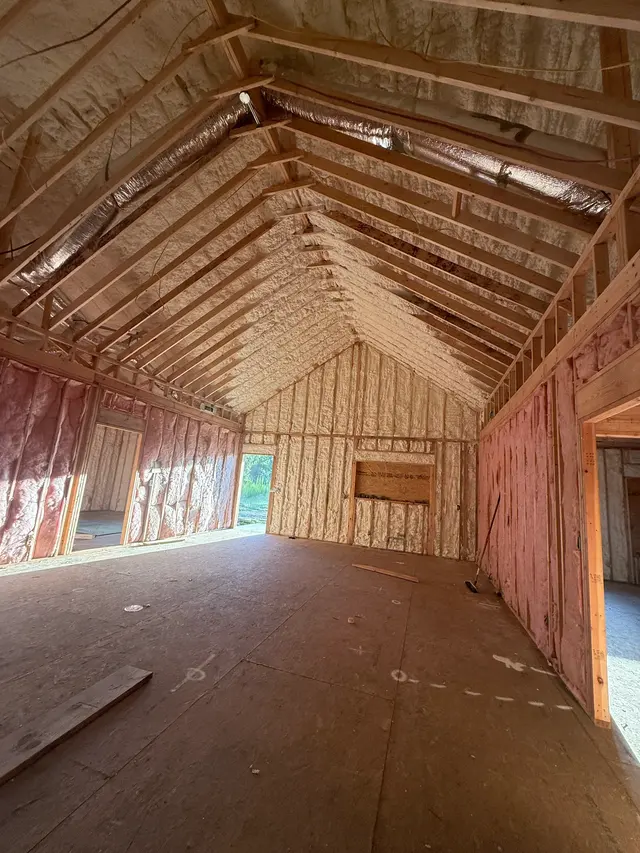
Tennessee Valley Spray Foam approaches spray foam roofing with attention to material selection, surface preparation, and installation requirements. Our team considers the existing roof condition, drainage, and compatibility of the foam and coating system before recommending an approach.
We focus on proper application conditions, accurate foam thickness, and consistent protective coating coverage. Our goal is to provide practical roofing solutions that address insulation needs while accounting for weather exposure, roof maintenance, and long-term performance.
Limited maintenance access may be possible, depending on the roofing system. However, repeated foot traffic can damage the protective coating and underlying foam. Designated walkways or additional protection may be needed where regular roof access is required.
Yes. Localized damage can often be repaired if the surrounding roofing system remains in good condition. The affected area must be inspected to determine whether foam replacement, coating repairs, or other work is necessary.
Spray foam roofing should generally be inspected at least twice a year and after severe weather. Regular inspections help identify coating wear, physical damage, and drainage issues before they become more serious. Follow the roofing system manufacturer's maintenance recommendations.
Yes. Spray foam and protective coatings require suitable weather and dry application surfaces. Rain, excessive moisture, or unsuitable temperatures can delay installation. Work should proceed only when conditions meet the selected products' requirements.
Keep the product information, installation scope, foam thickness, coating specifications, and maintenance instructions. These records can help with future inspections, repairs, and coating maintenance.
Request a quote for spray foam roofing in Lacey's Spring, AL, and surrounding areas. Contact Tennessee Valley Spray Foam to schedule an appointment.