
Reduced heat transfer
Slows heat movement between the attic and the conditioned living space below.
Loading
Loading
A well-insulated attic helps your home maintain comfortable indoor temperatures while reducing unwanted heat transfer throughout the year. Tennessee Valley Spray Foam provides professional attic insulation services in Lacey's Spring, AL, and surrounding areas. We assess your existing insulation, ventilation, and attic conditions to recommend suitable materials and installation methods for your home.
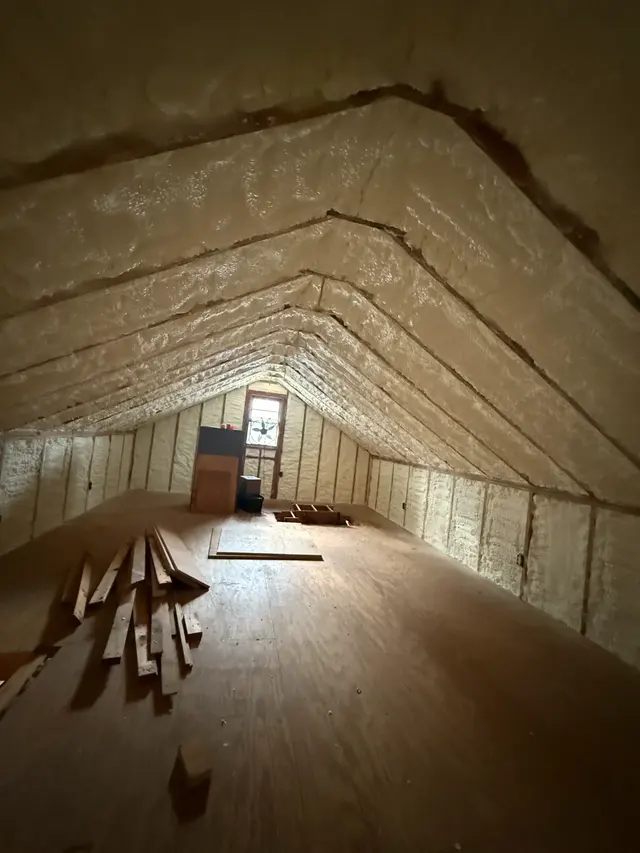
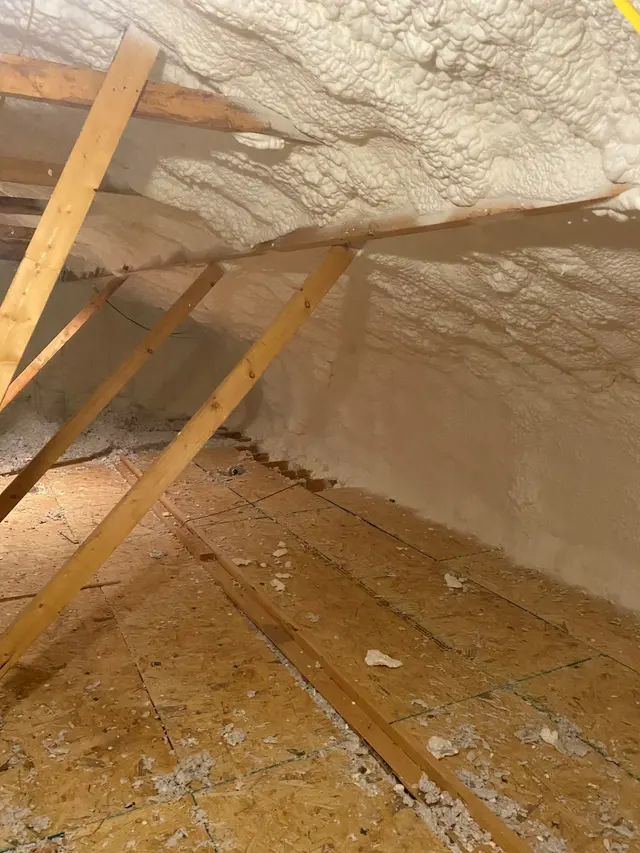
Heat moves from warm areas to cooler ones. In summer, the attic absorbs solar heat through the roof and transfers it downward into living spaces. In winter, heat escapes through poorly insulated ceilings, and gaps around attic-floor penetrations let warm indoor air leak into the attic. These problems can increase heating demand and make upstairs rooms uncomfortable.
Attic performance depends on more than just material depth. Ventilation strategy, air leakage at the attic floor, and achieving the right attic insulation R-value all dictate how effectively the attic functions as part of the thermal envelope.
Slows heat movement between the attic and the conditioned living space below.
Reduces the heating and cooling load on your HVAC system year-round.
Helps reduce temperature differences in rooms directly below the attic.
Sealing accessible attic-floor penetrations helps prevent unwanted air movement between the attic and living spaces.
Properly detailed attic insulation assemblies help manage humidity and reduce the risk of condensation.
Get expert attic insulation from Tennessee Valley Spray Foam, planned around your building and comfort needs.

Tennessee Valley Spray Foam selects attic insulation materials based on the attic type, existing conditions, moisture exposure, and project requirements. Attic assemblies, including vented attic floors, sealed or conditioned attics, and sloped roof assemblies, have different insulation requirements.
| Material | Key Characteristics | Common Attic Application |
|---|---|---|
| Blown-In Cellulose | Made from fire-treated cellulose fibers, fills irregular spaces, and provides consistent coverage at the specified installed density. | Vented attic floors over existing insulation or open framing |
| Blown-In Fiberglass | Lightweight, non-combustible, fills accessible cavities | Attic floor insulation in accessible vented attics |
| Spray Foam (Closed-Cell) | High R-value per inch, rigid, vapor retarder, air barrier | Roofline insulation in sealed attic assemblies, rafter bays |
| Spray Foam (Open-Cell) | Softer, expands into cavities, air barrier, sound dampening | Underside of roof deck in conditioned attic assemblies |
| Batt Insulation | Fiberglass or mineral wool, cut to fit framing bays | Framed attic knee walls, attic access panels, supplemental coverage |
For standard vented assemblies, blown-in cellulose or fiberglass on the attic floor offers a cost-effective option. For suitable unvented attic assemblies, spray foam applied along the roofline can establish the thermal and air-control boundary when the roof deck, framing connections, and other penetrations are properly sealed.
We evaluate your attic's configuration, existing insulation condition, ventilation details, and any moisture history before recommending the right material approach.
Attics vary significantly in construction, so an effective insulation strategy must account for your home's roof assembly.
Blown-in or batt insulation applied at the ceiling plane in attics with active or passive ventilation.
Applying spray foam attic insulation directly to the underside of the roof deck in conditioned attics housing ductwork or air handlers.
Insulating vertical framing walls in finished attic spaces and bonus rooms to separate conditioned from unconditioned areas.
Add insulated covers and weatherstripping to help reduce air leakage around attic access points.
Addressing complex roof angles to ensure complete, continuous insulation depth without blocking airflow paths.
Utilizing specialized dense-fill or spray foam assemblies to reach target R-values in compact spaces.
Before beginning attic insulation installation, we inspect for moisture intrusion, pest activity, inadequate ventilation baffles, and degraded materials to ensure your roof structure is primed for long-term efficiency.
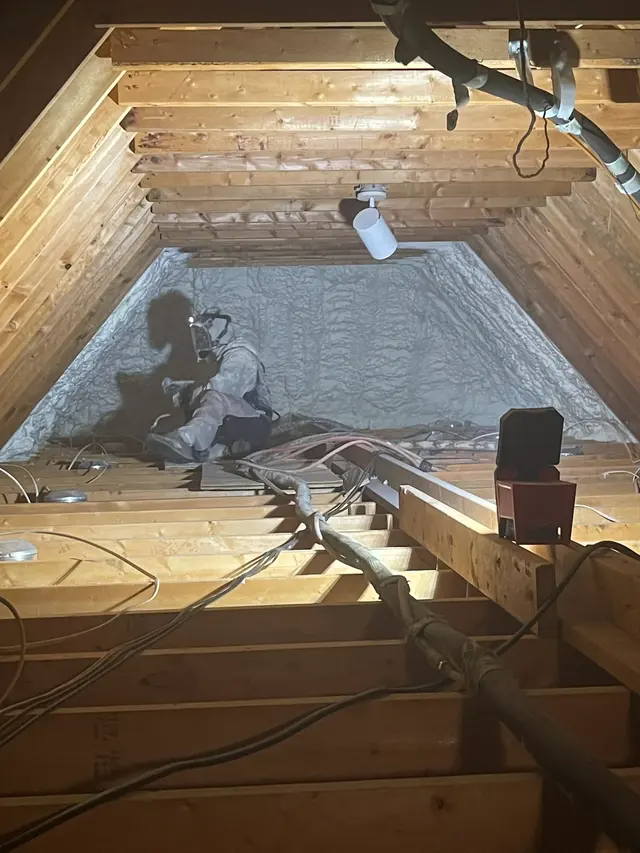
Our attic insulation installation process focuses on thorough assessment, appropriate material selection, and clean, consistent execution.
We access the attic to evaluate existing insulation depth, framing configuration, ventilation, moisture conditions, and access points.
We seal accessible attic-floor penetrations, including gaps around wiring, plumbing, and framing connections, while maintaining required clearances around recessed lights, flues, and other heat-producing components.
We protect nearby surfaces, address damaged insulation as needed, and install ventilation baffles where required for vented attic assemblies.
Our crews install the chosen materials to the precise depth needed to achieve the target attic insulation R-value for your climate zone.
We check insulation coverage and installed thickness or depth, confirm applicable installation requirements, clean the work area, and review the completed project with you.
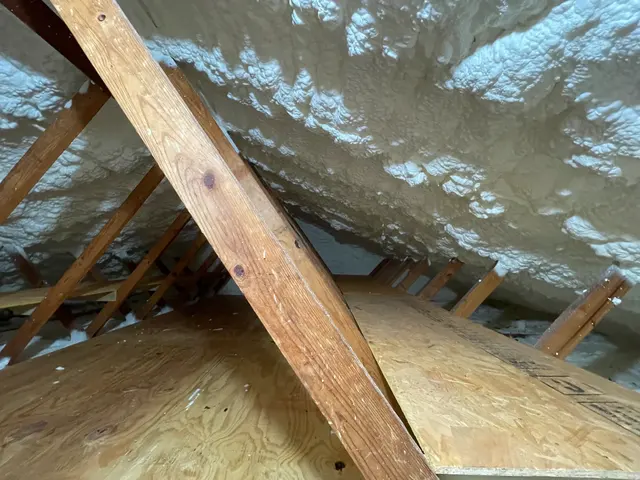
Tennessee Valley Spray Foam approaches attic insulation with attention to building conditions, material selection, and proper installation. Our team evaluates existing insulation, air leakage, ventilation, and moisture concerns to recommend solutions that suit each home's attic configuration.
We focus on correct insulation depth, careful preparation, and consistent coverage to support reliable thermal performance. Whether your home needs blown-in insulation, batt insulation, or spray foam along the roofline, we provide practical solutions based on your property's requirements.
Blown-in insulation is often more affordable for standard vented attic floors, while spray foam typically costs more because of its materials, equipment, and installation requirements. Total cost also depends on attic size, accessibility, existing insulation, and the required R-value.
During Alabama's hot summers, roof surfaces absorb solar heat, raising attic temperatures. Poor attic insulation allows more heat to reach the living spaces below, increasing cooling demand. Proper attic insulation helps reduce heat transfer and maintain more comfortable indoor temperatures.
Proper attic insulation and air sealing can help reduce condensation risks by limiting unwanted air movement and temperature differences. However, roof leaks, ventilation problems, and existing moisture damage must be addressed separately.
A properly designed sealed attic can reduce heat gain and loss around HVAC ductwork by bringing it within the home's insulated boundary. Actual improvements depend on duct sealing, insulation, attic moisture control, and overall system design.
Recessed lights require special attention because some fixtures generate heat and allow air leakage. IC-rated fixtures can generally be in contact with insulation when installed according to their listing. Non-IC-rated fixtures require appropriate clearances or approved protective assemblies.
Request a quote for attic insulation in Lacey's Spring, AL, and surrounding areas. Contact Tennessee Valley Spray Foam to schedule an appointment.