
Thermal control
Reduce heat gain in summer and heat loss in winter to support more consistent indoor temperatures.
Loading
Loading
Metal buildings are durable, but without proper insulation, they can become uncomfortable, costly to heat or cool, and prone to condensation. Whether you own a commercial facility, industrial workspace, or private garage, metal structures require insulation solutions suited to their construction and moisture conditions. Tennessee Valley Spray Foam provides professional metal building insulation services in Lacey's Spring, AL, and surrounding areas to help property owners improve comfort and insulation performance.
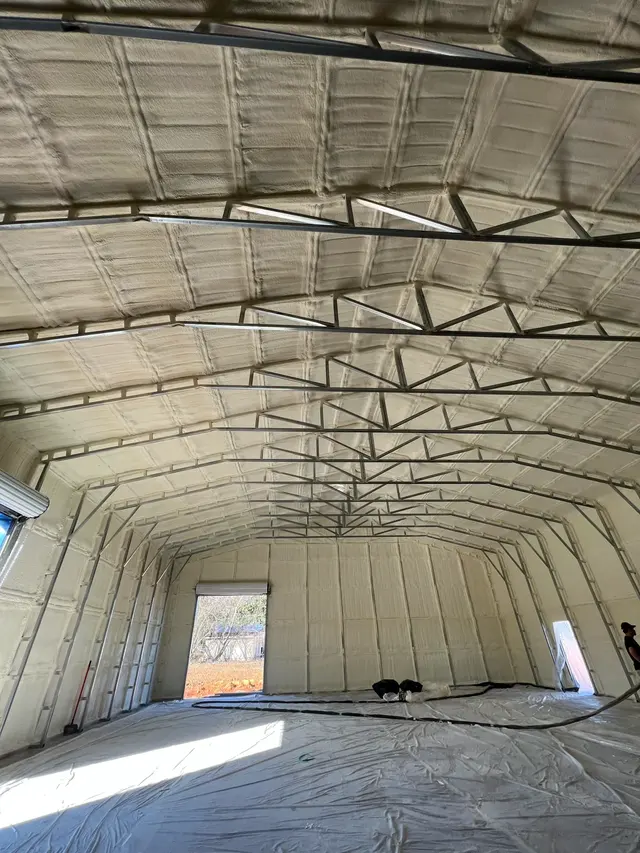
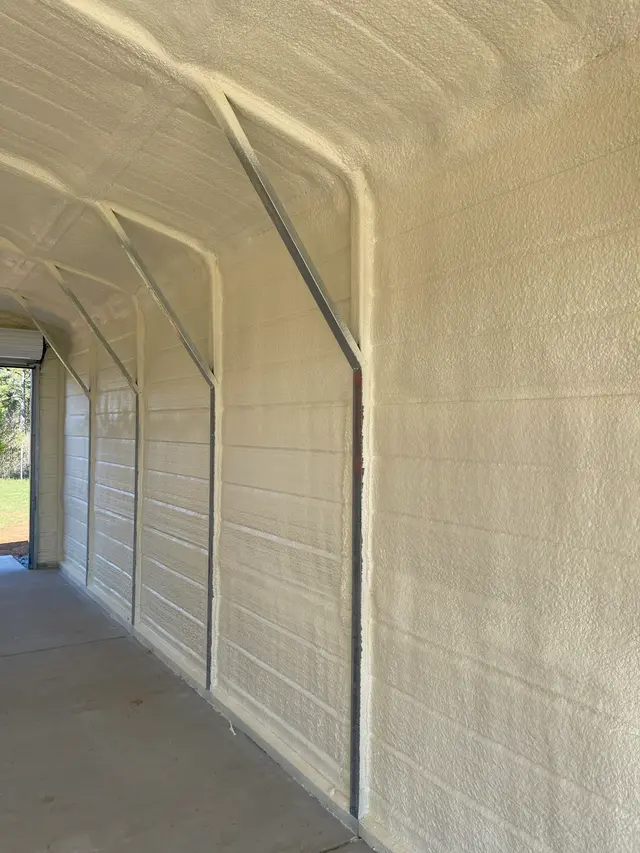
Metal transfers heat quickly, which can cause significant indoor temperature changes as outdoor conditions shift. Without adequate insulation, metal buildings can become excessively hot in summer and hard to heat in winter, increasing demand on heating and cooling systems.
Condensation is another common concern. When humid air contacts metal surfaces that are below the air's dew point, moisture can form on panels, roof sections, and framing. Persistent moisture may contribute to corrosion and damage to stored materials or equipment.
Proper metal building insulation helps address heat transfer and moisture concerns. The right approach depends on the building's use, framing configuration, ventilation, and climate conditions.
Reduce heat gain in summer and heat loss in winter to support more consistent indoor temperatures.
Reduce the risk of condensation on metal surfaces through proper insulation, air sealing, and moisture management.
Help reduce heating and cooling demands in conditioned metal buildings.
Help maintain more comfortable working conditions throughout the year.
Help limit temperature fluctuations and moisture conditions that may affect machinery, tools, and stored materials.
Certain insulation materials can help dampen exterior noise and rain impact inside metal structures.
Get expert metal building insulation from Tennessee Valley Spray Foam, planned around your building and comfort needs.
Not every insulation material performs the same way in metal construction. Tennessee Valley Spray Foam selects materials based on building use, framing type, moisture exposure, and insulation requirements.
| Material | Characteristics | Common Application |
|---|---|---|
| Closed-Cell Spray Foam | Rigid, water-resistant, provides approximately R-6 to R-7 per inch, depending on the product | Suitable for metal walls, rooflines, and framing areas |
| Fiberglass Batts | Flexible, cost-effective, requires proper air sealing and moisture-control details | Framed wall cavities and supplemental insulation |
| Vapor Barriers | Help control moisture vapor movement but do not provide significant thermal resistance | Used alongside insulation where required by the building assembly |
Closed-cell spray foam provides thermal resistance and can create an air barrier when installed at the required thickness. Fiberglass batts offer another option for suitable framed spaces, while vapor barriers help manage moisture movement where needed.
We assess your building's framing configuration, intended use, budget, and climate exposure before recommending materials. Metal building insulation R-value requirements vary by climate zone, building use, and applicable energy codes. Our recommendations account for these requirements and the available installation space.
Spray foam insulation can be applied to suitable metal walls, rooflines, and framing surfaces to help reduce air leakage and heat transfer. When installed continuously over framing members, it can also reduce thermal bridging.
Private and commercial garages that need improved indoor comfort and temperature control.
Metal structures used for offices, retail spaces, and other commercial activities.
Warehouses, manufacturing facilities, and storage buildings with specific insulation and moisture-control needs.
Trade and hobby spaces where indoor comfort, tool storage, and equipment protection matter.
Insulation applied to suitable roof assemblies to help reduce heat transfer and manage condensation risks.
The insulation approach depends on panel compatibility, framing details, and building requirements. Before applying spray foam directly to metal roof panels, we check manufacturer recommendations and panel compatibility. Standing-seam roofing requires special consideration because foam can restrict panel movement.
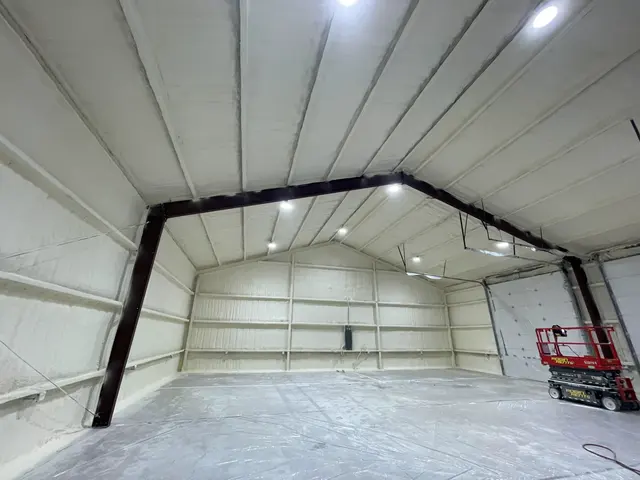
Our metal building insulation installation process focuses on proper preparation, material selection, and careful application to support reliable performance.
We inspect the framing, metal panels, existing insulation, moisture conditions, and building requirements to determine the appropriate approach.
We check ventilation, moisture sources, and condensation risks to determine whether additional moisture-control measures are needed.
We check that metal surfaces are clean, dry, and within the temperature range required for insulation application. We address any necessary preparation or surface treatment before work begins.
We install closed-cell spray foam, fiberglass batts, or vapor barriers as needed, following manufacturer instructions for proper coverage, placement, and application.
We check insulation coverage, installed thickness, and applicable fire-protection requirements. We then clean the work area and provide appropriate ventilation and safe re-entry instructions.
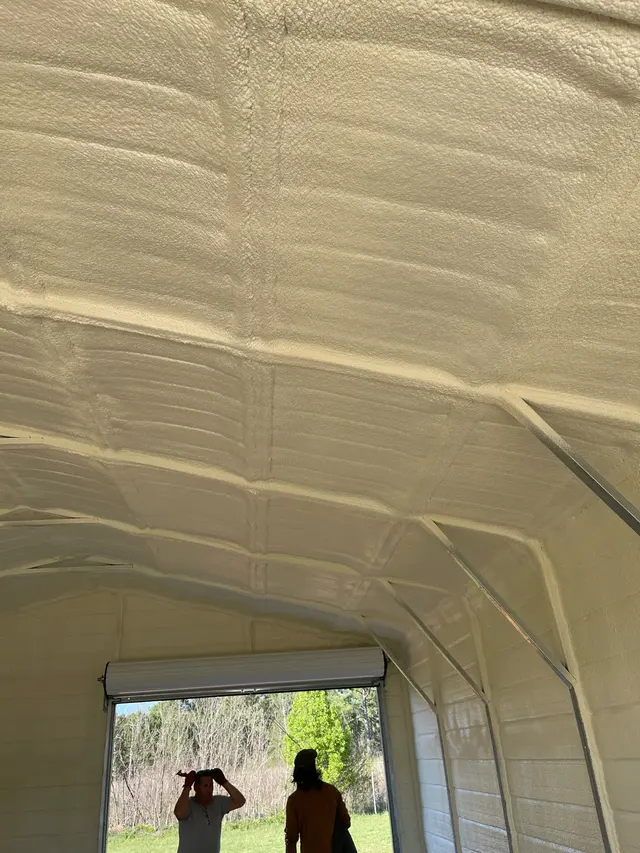
Tennessee Valley Spray Foam understands how insulation materials, application conditions, and metal surfaces affect insulation performance. Our team considers each building's construction, moisture exposure, and intended use before recommending suitable materials and installation methods.
We focus on proper surface preparation, product compatibility, and accurate insulation thickness to achieve consistent coverage. Our approach helps property owners address heat transfer, air leakage, and condensation concerns with insulation solutions suited to their building's requirements.
Spray foam insulation can help reduce heating and cooling costs by limiting air leakage and heat transfer. However, potential savings depend on building size, existing insulation, HVAC usage, and local energy costs. The time required to recover installation expenses varies by property.
Lacey's Spring has hot, humid summers and cooler winters. These conditions can increase heat transfer through metal walls and roofs. Condensation may also form when humid air contacts cooler metal surfaces. Proper insulation and moisture control can help reduce these problems.
Closed-cell spray foam can add rigidity to certain building assemblies, but it should not replace structural supports. Its primary purpose is to provide thermal resistance and air sealing. Any claimed improvement in structural strength requires appropriate testing or engineering verification.
Certain spray foam products can receive compatible coatings after curing. However, exposed foam may require an approved thermal barrier or other fire-protective treatment to meet building codes. The appropriate coating depends on the foam product, building use, and applicable fire-safety requirements.
Spray foam can make concealed wiring and framing more difficult to access during future renovations. Electrical junction boxes must remain accessible where required, and new conduit or fixtures should be secured to structural supports with appropriate fasteners rather than relying on the foam itself.
Request a quote for metal building insulation in Lacey's Spring, AL, and surrounding areas. Contact Tennessee Valley Spray Foam to schedule an appointment.