
Temperature control
Reduce heat transfer through insulated walls and roofs to maintain more consistent indoor temperatures.
Loading
Loading
Poor insulation can make pole barns uncomfortable during hot summers and cold winters. Condensation can also form when humid air meets cooler metal surfaces. Tennessee Valley Spray Foam provides professional pole barn insulation services in Lacey's Spring, AL, and surrounding areas. We recommend suitable materials and installation methods based on each building's construction, intended use, and moisture conditions.
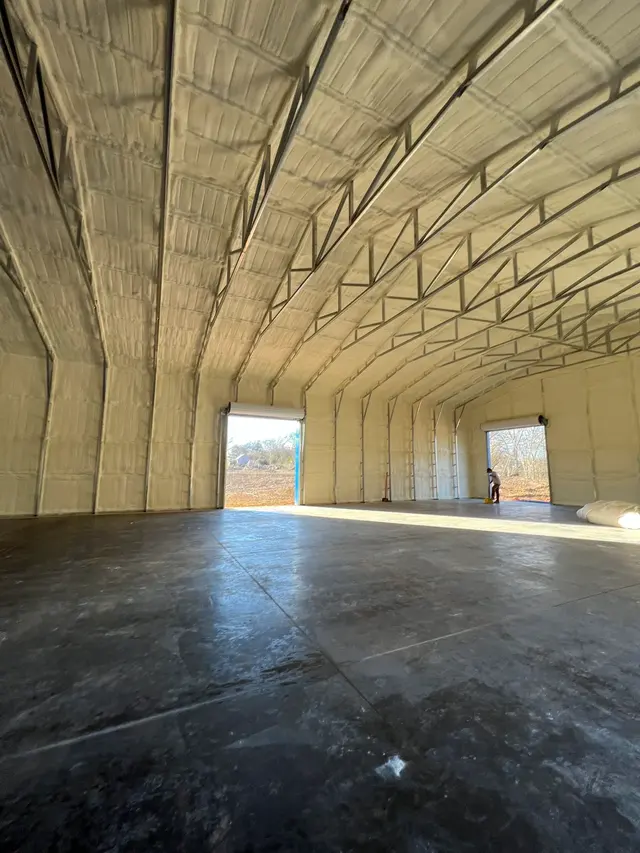
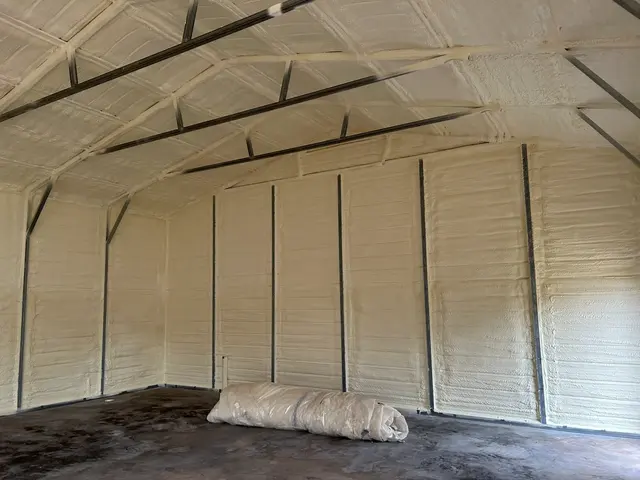
Excessive indoor heat, condensation on metal panels, and noticeable drafts can indicate insulation problems. However, roof leaks or poor ventilation may also cause these issues. We check these conditions before recommending insulation to ensure we don't cover up existing problems.
Proper pole barn insulation can help improve temperature control, reduce drafts, and manage condensation risks. Energy-efficient pole barn insulation may also reduce heating and cooling demands in conditioned buildings, although actual savings depend on building use and equipment.
Reduce heat transfer through insulated walls and roofs to maintain more consistent indoor temperatures.
Helps reduce drafts by sealing accessible gaps and connections.
Helps limit condensation risks when insulation works alongside proper ventilation and moisture control.
Make workshops and other regularly occupied spaces more comfortable throughout the year.
Help reduce temperature fluctuations and moisture conditions that may affect stored materials and equipment.
Get expert pole barn insulation from Tennessee Valley Spray Foam, planned around your building and comfort needs.
The best way to insulate a pole barn depends on its construction, intended use, and moisture conditions. Tennessee Valley Spray Foam offers three insulation materials, each with different properties and applications.
| Material | Key Characteristics | Common Uses |
|---|---|---|
| Closed-Cell Spray Foam | Dense, rigid, water-resistant, and helps limit air leakage and vapor movement | Suitable metal walls, roof assemblies, and framing areas |
| Fiberglass Batts | Flexible, cost-effective, and provides thermal resistance when properly installed | Framed wall and ceiling cavities |
| Radiant Barriers | Reflective material that reduces radiant heat transfer when installed with an adjacent air space | Suitable roof assemblies and attic areas |
The required pole barn insulation R-value depends on the building's use and applicable requirements, while material type and installed thickness determine thermal resistance. Closed-cell spray foam typically provides approximately R-6 to R-7 per inch, while fiberglass batts commonly provide around R-2.5 to R-4 per inch, depending on the product.
Radiant barriers work differently from conventional insulation. They reduce radiant heat transfer but don't replace materials that provide thermal resistance.
We consider framing, ventilation, moisture exposure, and project requirements before recommending suitable materials or combinations.
Agricultural pole barns, storage buildings, and workshops have different insulation needs. Our team considers how each structure is used, its construction details, and whether it has heating or cooling equipment.
Insulate suitable walls and roof assemblies while accounting for ventilation, moisture conditions, and agricultural activities.
Help reduce heat transfer and temperature fluctuations that may affect stored equipment, tools, and materials.
Improve insulation coverage to support comfortable working conditions while considering electrical access and heating or cooling equipment.
For pole barn wall insulation, we check framing depth, the condition of metal panels, and available installation space. Roof insulation also requires attention to moisture control and panel compatibility.
Before applying spray foam directly to metal roof panels, we check manufacturer recommendations and surface compatibility. We must address existing roof leaks or damaged materials before installation.
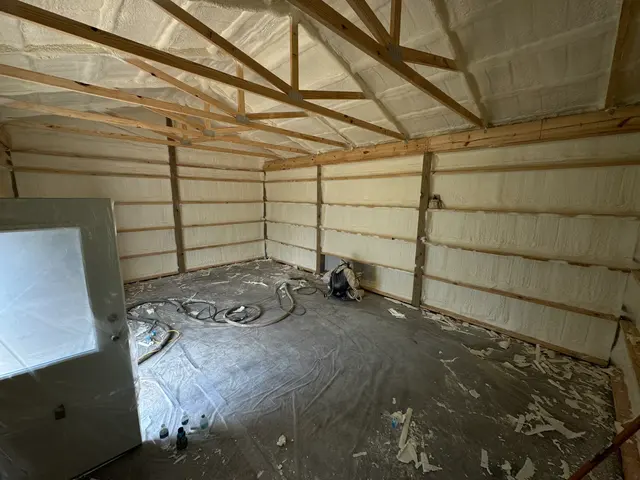
Our pole barn insulation installation process focuses on proper preparation, selecting suitable materials, and ensuring consistent coverage.
We inspect accessible walls, roof areas, framing, and existing insulation, checking for moisture issues and surface damage.
We recommend suitable insulation materials and explain the required coverage, thickness, and preparation.
We protect nearby belongings, prepare surfaces, and establish appropriate safety and ventilation measures.
We install the selected materials according to manufacturer instructions and the agreed project requirements.
We check insulation coverage, clean the work area, and explain applicable fire-protection and safe re-entry requirements.
Spray foam installation requires additional safety precautions. Keep unprotected people and animals out of the designated work area during spraying until the manufacturer's re-entry requirements are met. Exposed spray foam may also require approved fire-protective coverings.
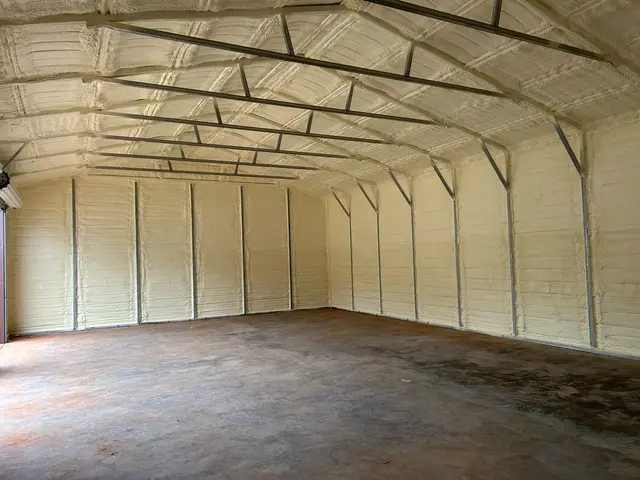
Tennessee Valley Spray Foam provides pole barn insulation solutions based on each building's construction, moisture conditions, and intended use. Our team considers framing details, metal surfaces, and insulation requirements before recommending suitable materials.
We focus on proper preparation, accurate insulation depth, and careful material placement to support consistent coverage. Our approach helps property owners understand their options and address insulation needs without overlooking existing moisture or building problems.
Yes. Many existing pole barns can be insulated if their framing, metal panels, and surfaces are suitable. Address any active leaks, moisture problems, or damaged materials before installation.
Closed-cell spray foam can suit compatible metal walls and roof assemblies. It provides thermal resistance and helps reduce air leakage. However, check panel compatibility, surface conditions, and moisture-control requirements before application.
Yes. You can insulate selected walls, roof areas, or other accessible sections of your pole barn. The best approach depends on how you use the building, its construction, and whether the insulation fits your overall moisture-control plan.
Proper insulation can help reduce condensation risks by limiting heat transfer and unwanted air movement. However, you must address existing roof leaks, ventilation problems, and other moisture sources separately.
Properly installed and protected insulation generally requires little routine maintenance. However, roof leaks, pest damage, renovations, or physical damage may require inspection and localized repairs.
Request a quote for pole barn insulation in Lacey's Spring, AL, and surrounding areas. Contact Tennessee Valley Spray Foam to schedule an appointment.