
Reduced air leakage
Helps seal accessible gaps and joints when applied at the appropriate thickness.
Loading
Loading
Tennessee Valley Spray Foam provides professional commercial spray foam insulation services in Lacey's Spring, AL, and surrounding areas. We install open-cell and closed-cell spray foam to help reduce air leakage, limit heat transfer, and improve indoor comfort. Our team recommends suitable materials and ensures proper installation based on your building's needs.
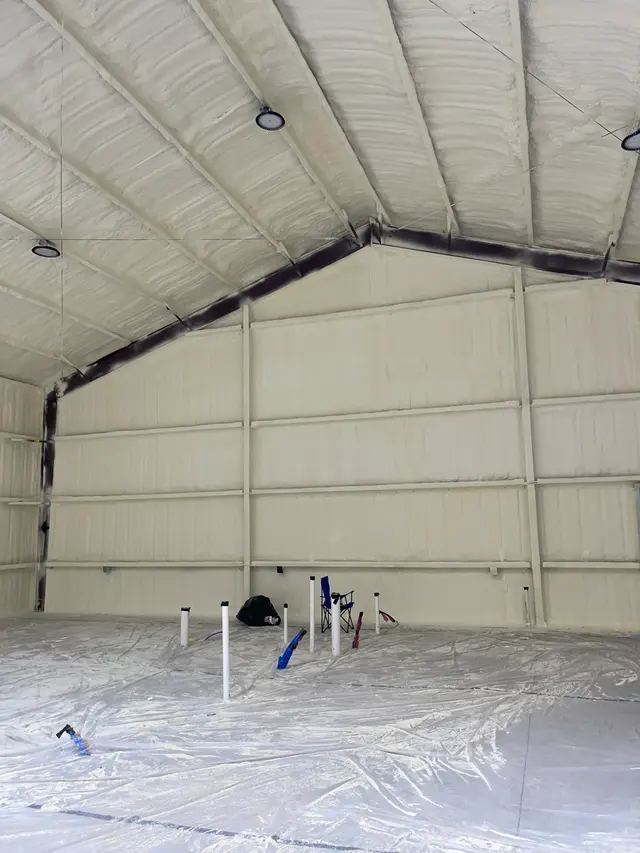
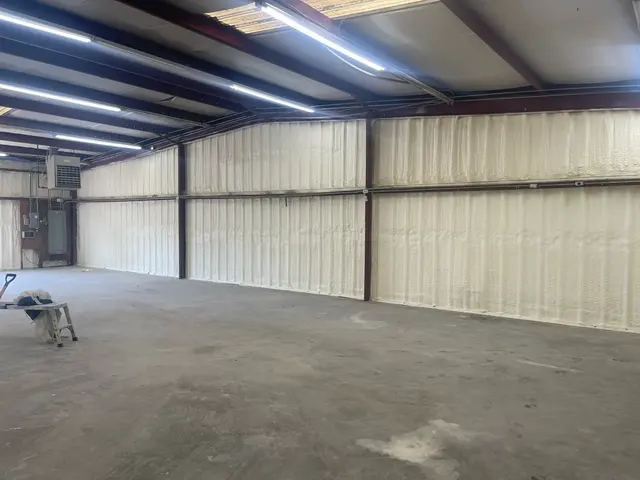
Poor insulation can contribute to uneven temperatures, drafts, and excessive heat transfer in commercial buildings. Spray foam insulation expands during application, helping fill accessible gaps and irregular spaces that can be difficult to insulate with some traditional materials.
Properly installed commercial spray foam insulation can improve thermal performance and reduce unwanted air movement. However, insulation alone cannot correct HVAC problems, roof leaks, or inadequate ventilation.
Helps seal accessible gaps and joints when applied at the appropriate thickness.
Limits heat transfer through insulated building assemblies.
Expands to fill suitable framing gaps and hard-to-reach spaces.
May reduce heating and cooling demands in conditioned buildings.
Provides material options with different vapor-control properties to suit the building assembly.
Get expert commercial spray foam from Tennessee Valley Spray Foam, planned around your building and comfort needs.
Commercial properties have different insulation requirements based on their layout, activities, and operating conditions. Tennessee Valley Spray Foam provides insulation solutions for suitable areas in offices, factories, warehouses, and other commercial facilities.
Our common applications include:
| Application | How Spray Foam Insulation Helps |
|---|---|
| Offices | Improves insulation coverage in suitable walls, ceilings, and roofline areas to support comfortable indoor conditions. |
| Factories | Reduces heat transfer through accessible building assemblies while accounting for production equipment, ventilation, and worksite requirements. |
| Air Compressor Rooms | Insulates suitable walls and ceilings while maintaining equipment ventilation, cooling airflow, and maintenance access. |
| Garages | Provides thermal insulation and air sealing in suitable assemblies while respecting fire-safety and vehicle-related requirements. |
| Warehouses | Helps reduce heat transfer across large wall, ceiling, and roofline areas where insulation coverage is needed. |
| Roofs | Insulates suitable interior roofline and roof-deck assemblies while considering moisture control, material compatibility, and building requirements. |
| Whole Buildings | Coordinates insulation across suitable walls, ceilings, and roofline assemblies to improve overall building-envelope coverage. |
Roof-deck insulation installed inside a building differs from an exterior spray foam roofing system, which requires roofing-grade materials and compatible protective coatings.
We evaluate the surfaces, accessibility, moisture conditions, and intended use of each area before recommending installation.
Choosing between open-cell and closed-cell spray foam depends on the building assembly, available insulation space, and performance requirements. Both materials provide thermal resistance and can reduce air leakage when installed at the thickness specified for the product.
| Feature | Open-Cell Spray Foam | Closed-Cell Spray Foam |
|---|---|---|
| Material Structure | Soft and flexible | Dense and rigid |
| Typical R-Value per Inch | Approximately R-3.5 to R-4 | Approximately R-6 to R-7 |
| Air Sealing | Helps reduce air leakage at the specified thickness | Helps reduce air leakage at the specified thickness |
| Water Vapor Movement | More vapor permeable | More vapor resistant |
| Common Applications | Suitable for interior walls, ceilings, and roofline assemblies | Suitable for walls, metal building assemblies, and areas with limited insulation depth |
| Primary Advantage | Expands to fill suitable cavities and helps reduce sound transmission | Provides greater thermal resistance per inch and increased vapor resistance |
The commercial spray foam insulation R-value helps determine the thickness needed for a particular application. However, R-value alone does not determine the best material.
We also consider moisture conditions, drying potential, substrate compatibility, and applicable building requirements. Closed-cell foam is more water-resistant than open-cell foam, but neither material should be used to cover active leaks or unresolved moisture damage.
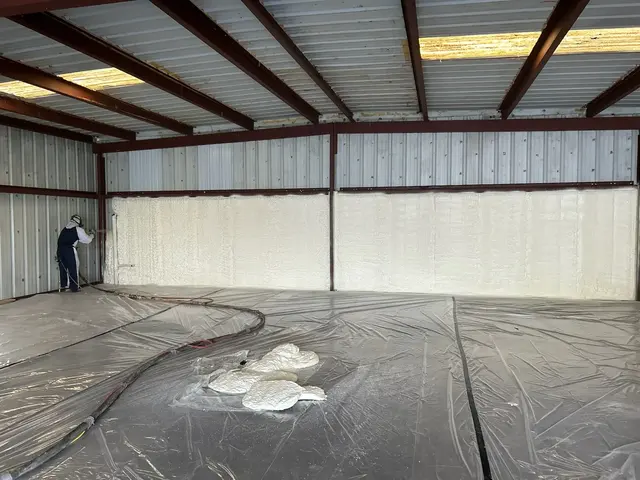
Our commercial spray foam insulation installation process focuses on proper preparation, accurate material application, and worksite safety. We review the building's construction and operating conditions before installation begins.
We inspect accessible surfaces, existing insulation, moisture concerns, and equipment clearances to determine the appropriate insulation approach.
We recommend the suitable foam type, coverage areas, and required thickness while discussing access needs and worksite restrictions.
We protect nearby equipment and surfaces, prepare the substrates, and establish appropriate ventilation and safety measures. Existing leaks or moisture damage must be addressed before spraying.
We apply the selected spray foam according to manufacturer instructions, project specifications, and required application conditions.
We review visible insulation coverage, check for missed areas, clean the worksite, and explain applicable protective covering and safe re-entry requirements.
Indoor spray foam installation requires specific safety precautions. Occupants and unprotected workers must remain outside areas affected by spraying and potential exposure, with building evacuation as required by the site safety plan. Re-entry must follow the product manufacturer's ventilation and reoccupancy instructions.
Exposed spray foam may also require a code-compliant thermal barrier or another approved protective assembly, depending on the building's use, installation location, and applicable requirements.
Commercial insulation projects often involve occupied buildings, operating equipment, and daily business activities. We discuss access requirements and scheduling concerns before installation so property owners can prepare for the work.
Some projects may be completed in stages, depending on building conditions and safety requirements. However, separating a work area does not automatically make adjacent occupied spaces safe during spray foam application.
Our planning considers staff access, equipment protection, ventilation, material curing, and cleanup. We explain worksite restrictions and re-entry requirements so business owners understand what to expect before normal operations resume.
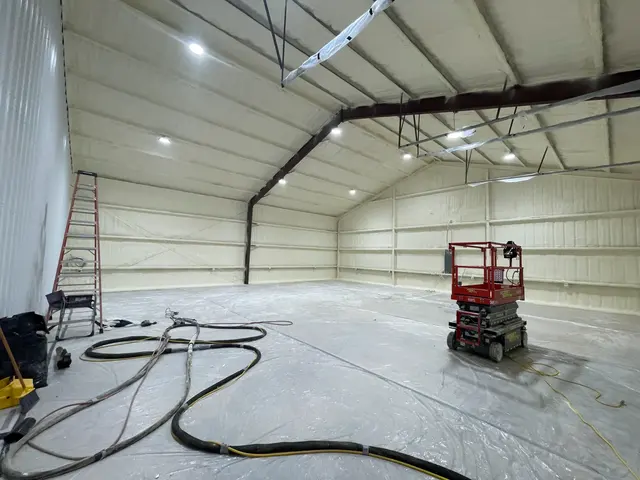
Tennessee Valley Spray Foam provides commercial spray foam insulation solutions based on each building's construction, intended use, and insulation requirements. Our approach draws on technical experience with manufacturing, industrial finishing, and polyurethane materials to support careful material selection and application planning.
We focus on proper surface preparation, consistent insulation coverage, and clear communication throughout the project. Our team also considers equipment accessibility, moisture conditions, and future maintenance needs before installation. We focus on quality workmanship and recommend insulation solutions that fit each building's needs.
Yes. Cured spray foam can be cut or removed when remodeling or repairs require access to insulated areas. Removal may take additional labor, and damaged insulation should be properly restored afterward.
Many commercial spray foam installations require a code-compliant thermal barrier or another approved protective assembly. The exact requirements depend on the building's use, insulation location, selected product, and applicable building codes.
Yes. Spray foam can be installed in many existing commercial buildings when surfaces are accessible, compatible, and properly prepared. Existing moisture problems, damaged materials, and required equipment clearances should be addressed before installation.
Some energy-efficiency programs may offer incentives for qualifying commercial insulation improvements. Availability and eligibility depend on the utility, program requirements, and project details. Check with your utility or the relevant program administrator for current information.
Keep the product information, installation scope, insulation thickness, and any applicable fire-protection documentation. You should also retain relevant maintenance instructions and safe occupancy information for future building work or inspections.
Request a quote for commercial spray foam in Lacey's Spring, AL, and surrounding areas. Contact Tennessee Valley Spray Foam to schedule an appointment.